
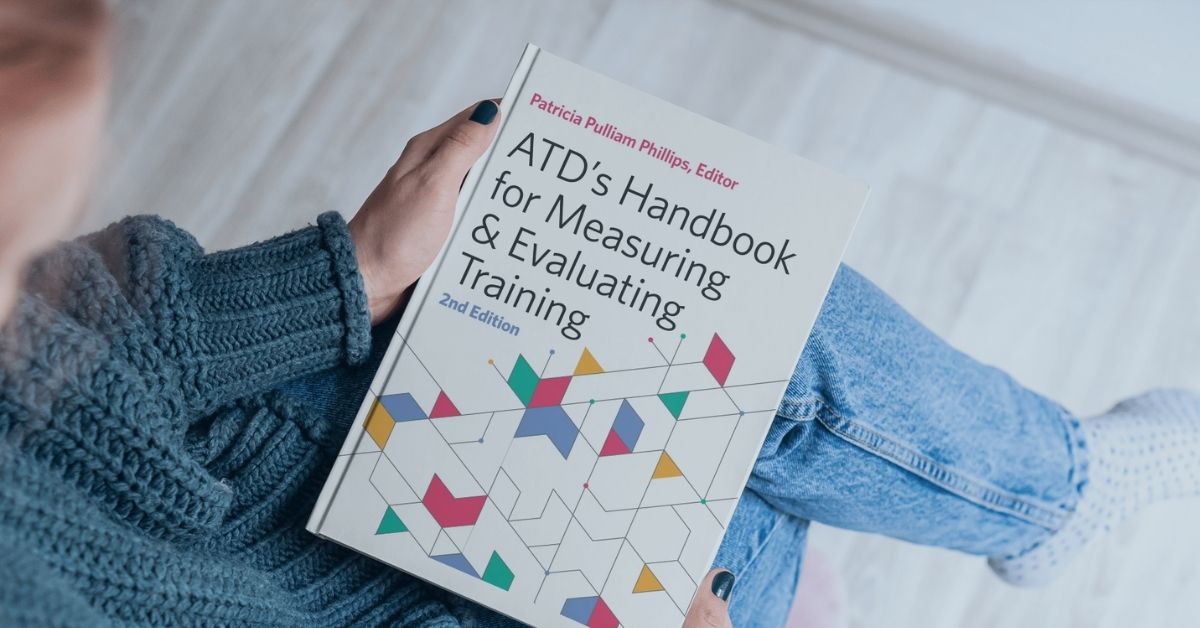

The ATD’s Handbook for Measuring, Evaluating, and Training was released in June, and I was excited when my copy arrived in Australia just last week. This is truly a fantastic resource, thanks especially to Patti Phillips for her outstanding work in editing and bringing together such a talented group of experts. I’m delighted to have been involved.
Here are some of my top highlights from the handbook so far. I haven’t finished reading the entire book yet, so apologies if I miss anything important!
Generative AI in Evaluation by Trish Uhl
Trishul’s chapter (page 387) is a practical case study on using generative AI in measurement and evaluation. Updated right up to publication, it covers:
– The latest research and stats on generative AI
– Building AI literacy and decision-making skills
– Embracing curiosity and experimentation
– Ethical and responsible AI use with a clear focus on data privacy and bias
– Choosing the right AI tools and visualizing data effectively
This chapter is packed with hands-on ideas and resources for anyone interested in integrating AI into their evaluation work.
Designing Learner Surveys with Will Thalheimer
Will Thalheimer’s chapter on designing learner surveys is a standout. With his deep experience, he introduces the L-TEM model (a learning transfer evaluation model) and shares practical sample questions for surveys that make applying these concepts straightforward and effective. This chapter is full of useful guidance for anyone creating learner surveys.
Isolating Program Effects by Jack Phillips and David Maddock
Chapter 13 takes a deep dive into how to determine whether the results you see are truly due to your learning program or influenced by other factors. This section is essential for anyone serious about valid evaluation. It highlights techniques like trend line analysis, control groups, and using estimates—my favourite method—to strengthen the validity of your data.
Storytelling in Evaluation with Kevin Yates
Kevin Yates’ chapter on telling the story (page 265) brings storytelling into the world of evaluation. He offers practical questions to help shape communication plans around sharing your results and impact studies. The way he weaves storytelling with data makes this chapter an invaluable resource for improving how we present evaluation findings.
Building Sustainable Measurement Practices with Holly Burkett
Holly Burkett’s chapter really grabbed me with its focus on **sustainable measurement practice**. She explains how to align learning measurement with overall business practices and organisational stakeholders to ensure it’s not just a one-off project but an ongoing process. The chapter encourages using different models and approaches depending on the context.
Action Planning as a Measurement and Transfer Strategy (My Chapter)
I was honored to contribute Chapter 10, focusing on action planning as a strategy for measurement and learning transfer. Whether through tools like Coach M or human team interactions, action planning forms a strong foundation to support measurement efforts. The book also includes great dashboard examples to visualise this approach.
Wrapping Up
It’s been a privilege to be part of this book alongside so many respected experts. The handbook includes conversational extracts and case studies that show practical ways to follow up on learning transfer and unlock valuable data insights.
If you’re interested in getting a copy, here’s the ordering link. And for those in Australia, just a heads-up: copies take a little time to arrive!
Thanks for reading— if you want to chat about learning measurement and evaluation then do get in touch.
—
*Feel free to share your thoughts or ask questions about the book!*
